
Uncategorized
5 Tips for Success in the Japanese Used Car Export Business – Process, Key Points, and Common Pitfalls Explained
apanese used cars are highly valued around the world for their quality, durability, and reliability. In recent years, demand for Japanese used cars, hybrid vehicles, and EVs has continued to rise—especially across Africa and the Middle East, making this a growing and profitable export business.
In this article, we’ll explain the basic process of used car export from Japan, share five key tips for success, and highlight important points to avoid costly mistakes. Whether you’re planning to start a car export business or expand your current operations, this guide will help you navigate the market effectively.
Why Japanese Used Car Exports Are Gaining Attention
Global shifts in automotive demand have created new opportunities in emerging regions such as Africa and the Middle East, where there is increasing demand for reliable used cars.
Rising new car prices and the weak yen have made Japanese exports more competitive internationally. Additionally, with the growing focus on environmental sustainability, exports of EVs and hybrid cars are expanding rapidly. Partnering with an experienced logistics company that can handle these vehicles safely and efficiently is a key factor for long-term success.
Basic Process of Exporting Used Cars from Japan
Conduct Market Research and Identify Target Countries
The first step is to determine which cars to export and where. Each market has its own preferences and price ranges. For instance, Toyota and Nissan SUVs are especially popular in Africa for their durability, while the Middle East is seeing increased demand for newer models and EVs.
Understanding local markets and conducting price analysis will help you identify the most profitable regions.
Check Export Licenses and Legal Requirements
Exporting used cars from Japan requires compliance with various laws and regulations. Exporters must register as official dealers, prepare vehicle deregistration certificates and other documents, and complete export deregistration procedures.
Since customs clearance and inspection standards differ by country, it’s best to work with an experienced logistics partner familiar with local requirements.
Understand Trade Terms (Incoterms)
When finalizing contracts, it’s crucial to define responsibilities and risk transfer using Incoterms such as FOB (Free On Board) or CIF (Cost, Insurance & Freight).
A clear understanding of cost and risk allocation helps prevent disputes and ensures smooth transactions.
Arrange Logistics and Transportation
Reliable logistics are essential for safe and efficient export operations.
At Sannou Freight Shipping Co., Ltd., we provide comprehensive multimodal logistics—covering land, sea, and air transport. Our services include container shipping, consolidated cargo, and heavy vehicle transport, as well as full support for documentation and customs clearance at destination ports.
Key Tips for a Successful Used Car Export Business
Utilize JETRO and Local Chambers of Commerce
Organizations like JETRO (Japan External Trade Organization) and local chambers of commerce offer valuable resources, including up-to-date information on import regulations, currency trends, and buyer insights.
They also host export seminars, subsidy programs, and business matching events, which can help you expand internationally with confidence.
Understand Demand and Build a Targeted Strategy
Success depends on identifying the right cars for the right market.
For example, durable SUVs from Toyota and Nissan sell well in Africa, while newer hybrid and EV models are in demand across the Middle East.
Be aware of country-specific factors such as left-hand/right-hand driving rules, emission standards, and model-year restrictions, and plan your inventory accordingly.
Manage Regulatory and Contract Risks
Because international trade involves multiple jurisdictions, exporters must manage legal and contractual risks carefully.
Each country has its own import restrictions and emission standards, and noncompliance can result in customs delays. Ensure that contracts clearly specify payment methods (advance payment, L/C), delivery terms (Incoterms), and risk responsibilities to avoid disputes.
Take Advantage of Subsidy and Grant Programs
Small and medium-sized enterprises can benefit from government and municipal export support programs, such as subsidies for overseas expansion or exhibition participation.
These programs help reduce financial risk while exploring new markets, especially for EV or eco-friendly vehicle exports.
Consult with Experts in Trade, Tax, and Legal Matters
Engage with professionals who specialize in international trade operations, tax planning, and legal compliance.
Early consultation with experts or institutions like JETRO ensures proper documentation, timely subsidy applications, and long-term business stability.
Important Considerations and Risk Management
Stay Updated on Country-Specific Import Rules and Tariffs
Each destination country sets its own rules regarding import year limits, emission standards, and tariffs. These may change frequently, so exporters should maintain close communication with customs agents and logistics partners to stay compliant.
Maintain Vehicle Quality and Meet International Standards
Condition, mileage, and maintenance history all affect buyer trust.
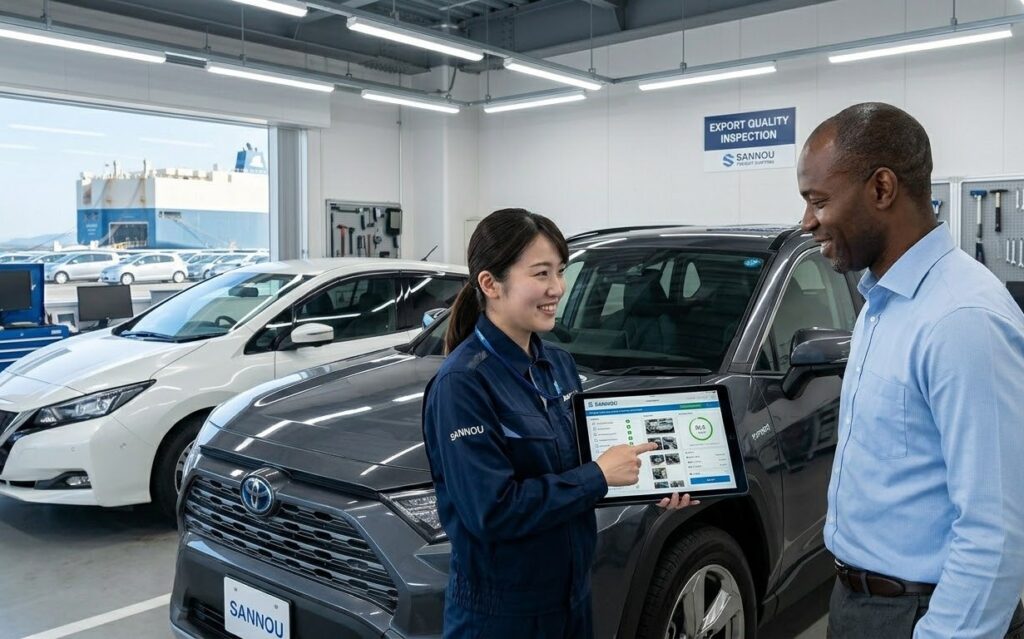
Conduct pre-export inspections and provide detailed inspection reports and photos to demonstrate vehicle quality. Transparency strengthens your reputation in global markets, especially in Africa and the Middle East, where “Made in Japan” symbolizes reliability.
Draft Clear and Detailed Contracts
Avoid vague terms and clearly specify vehicle condition, delivery terms, and payment methods.Include governing law, dispute resolution, and arbitration clauses to minimize future risks.
Manage Exchange Rate Fluctuation
Exchange rate volatility can significantly affect profits. Use forward contracts or hedging strategies to stabilize revenue and plan cash flow with financial institutions or trade finance providers.
Summary
The Japanese used car export industry continues to grow, driven by strong global demand and Japan’s reputation for quality. However, success requires expertise in regulations, logistics, and contract management, as well as collaboration with a trusted partner.
At Sannou Freight Shipping Co., Ltd., we provide integrated international logistics solutions across land, sea, and air.
If you’re planning to export used, hybrid, or EV vehicles from Japan, contact us today. Our safe, fast, and reliable logistics services will help you expand your global business with confidence.